Mining
Proof-of-Work: How It Works and Why It Matters
Proof-of-Work (PoW) is the consensus mechanism that gave rise to the world of modern cryptocurrencies. Introduced with Bitcoin in 2009, it still represents one of the safest and most tested systems to guarantee…
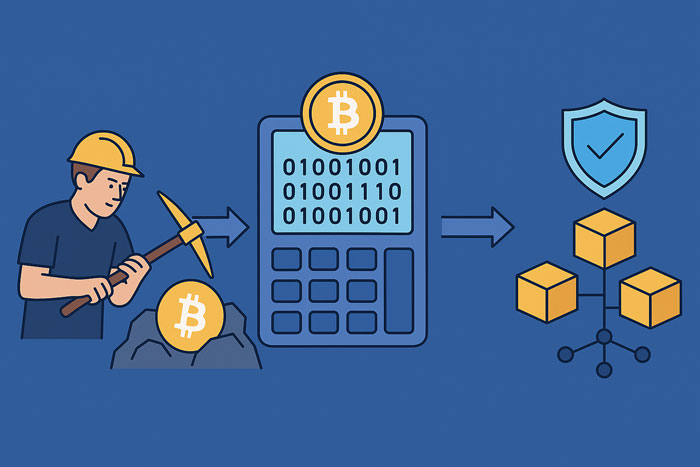
Proof-of-Work (PoW) is the consensus mechanism that gave rise to the world of modern cryptocurrencies. Introduced with Bitcoin in 2009, it still represents one of the most secure and tested systems to guarantee the integrity of decentralized blockchains.
Despite criticism related to energy consumption, PoW continues to be the pillar on which many of the most solid and censorship-resistant networks are based.
What is Proof-of-Work
Proof-of-Work is a method that requires network participants, called miners, to demonstrate that they have carried out real computational work in order to validate transactions and create new blocks.
This “work” consists of solving complex mathematical problems through computing power. The first miner to find the correct solution gets the right to add the block to the blockchain and receives a cryptocurrency reward.
How PoW Works
The Proof-of-Work process follows some fundamental steps:
- Transactions are collected in a block
- Miners compete to find a valid hash
- The calculation must respect specific difficulty criteria
- The block is verified by the network
- The winning miner receives the reward
This mechanism makes it extremely difficult to modify data already recorded, as it would require a huge amount of computing power.
Why Proof-of-Work Is Safe
The security of PoW comes from its cost:
- Economic: hardware and energy are needed
- Thunderstorm: time and resources are needed
- Technical: advanced skills needed
To attack a PoW blockchain it would be necessary to control over 51% of the total computing power, an economically and logistically almost impossible feat on mature networks like Bitcoin.
PoW and Decentralization
One of the strengths of Proof-of-Work is the neutrality of consensus. Anyone, in theory, can become a miner, without having to own tokens in advance or receive approvals from central bodies.
This favors:
- Resistance to censorship
- Transparency of the rules
- Equal network access
PoW rewards those who invest real resources, not those who simply hold digital capital.
Criticisms and Limits of Proof-of-Work
The main criticisms of PoW concern:
- High energy consumption
- Environmental impact
- Geographic centralization of mining
However, the sector is evolving towards renewable energy and increasingly efficient models, progressively reducing the environmental impact.
Proof-of-Work vs Other Consents
Compared to alternative mechanisms such as Proof-of-Stake, PoW offers:
- Greater resistance to attacks
- Proven safety history
- Less risk of financial oligopolies
For this reason it still remains the preferred choice for blockchains that aim for maximum security.
Conclusion
Proof-of-Work is much more than a simple algorithm: it is the basis of security, trust and decentralization in the crypto world. Despite the challenges, it continues to demonstrate its importance as a robust and reliable model for the most relevant blockchain networks.