Mining
Energy Consumption in Mining: Myths and Realities about the Cost of Blockchain
The topic of energy consumption in mining is one of the most discussed and often misunderstood in the world of cryptocurrencies. In public debate, mining is frequently described as an excessively polluting activity…
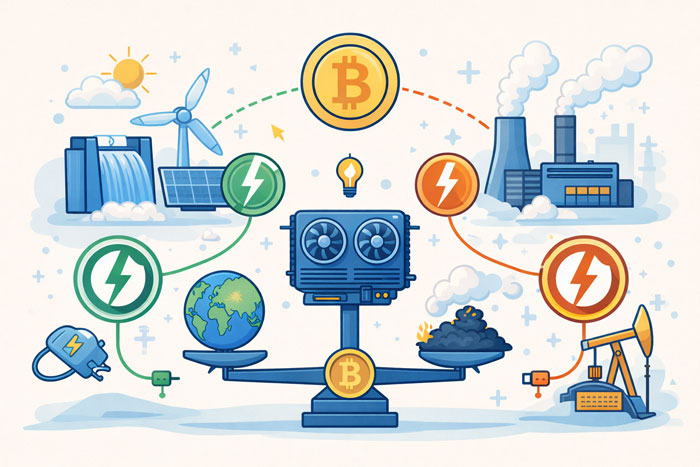
The topic of energy consumption in mining is one of the most discussed and often misunderstood in the world of cryptocurrencies. In the public debate, mining is frequently described as an excessively polluting and unsustainable activity, but the reality is more complex and deserves in-depth analysis. Understanding how and why mining consumes energy is key to distinguishing myths from real economic and environmental implications.
Mining, especially mining based on Proof-of-Work, requires energy because it uses computing power to ensure security and decentralization of the blockchain. This consumption is not waste in itself, but represents the cost necessary to make transactions verifiable, immutable and resistant to attacks. Without this energy expenditure, a decentralized network could not maintain the same level of security.
One of the most widespread myths is that mining consumes energy in an indiscriminate and uncontrolled way. In reality, miners have a strong incentive to seek low-cost energy, often coming from renewable sources or energy surpluses that would otherwise be wasted. In many areas of the world, mining takes advantage of hydroelectric, solar, wind or excess energy produced during times of low demand.
Another little-considered aspect is the technological evolution of hardware. New generation ASICs are increasingly efficient in terms of joules per terahash, allowing you to obtain greater computing power with lower consumption than in the past. This means that, even in the face of an increase in global hashrate, the overall efficiency of the sector continues to improve.
It should also be remembered that the energy consumption of mining must be compared to that of other traditional financial systems, which include physical infrastructure, transportation, data centers and intermediaries. When analyzed proportionally, mining represents an energy cost aimed at the security of a global financial system without intermediaries.
In conclusion, energy consumption in mining cannot be reduced to a simple matter of waste. It's the price you pay for a decentralized, secure and censorship-resistant network. Separating myths from reality allows us to better understand the role of mining in the evolution of blockchain and its future potential in an increasingly sustainability-oriented context.