Mining
Mining in 2025: Opportunities, Risks and Global Trends
Cryptocurrency mining in 2025 is in a phase of strong transformation. After years of growth, consolidation and regulatory changes, mining has become increasingly professional, competitive and strategic…
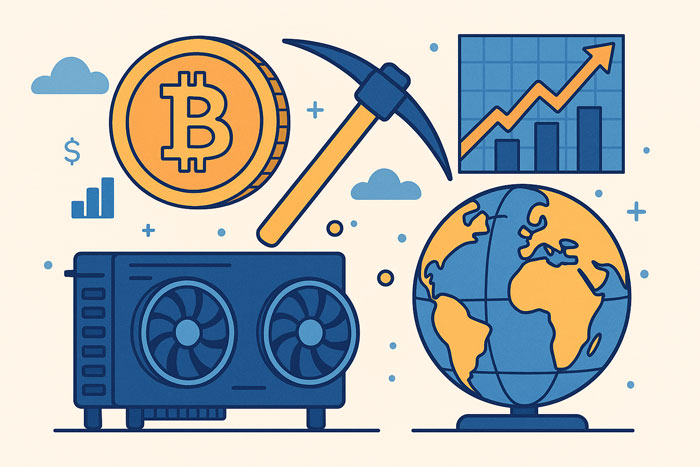
Cryptocurrency mining in 2025 is in a phase of strong transformation. After years of growth, consolidation and regulatory changes, mining has become increasingly professional, competitive and strategic. It is no longer just a question of computing power, but of efficiency, planning and long-term vision.
In this constantly evolving global scenario, new opportunities emerge, but also risks that need to be carefully evaluated.
Mining Opportunities in 2025
Despite the increase in network difficulty, mining remains an attractive sector for several reasons:
- More efficient hardware: new generation ASICs offer reduced power consumption and high hashrates.
- Renewable energies: more and more mining farms exploit solar, hydroelectric and energy surpluses.
- New PoW blockchains: some emerging networks still offer good return opportunities.
- Mature markets: analysis and management tools allow you to optimize costs and profits.
For those who plan carefully, mining can represent a stable source of income in the long term.
The Main Risks to Consider
Alongside the opportunities, mining in 2025 also presents important critical issues:
- High energy costs in many areas of the world
- Increasingly aggressive industrial competition
- Volatility of the crypto market, which directly affects profitability
- Variable regulations, often unclear or rapidly changing
- Hardware obsolescence, with increasingly shorter life cycles
Ignoring these factors can turn a promising investment into a significant loss.
Global Mining Trends
Mining in 2025 follows some clear trends globally:
1. Geographical migration
Mining farms are moving to countries with low-cost energy and more favorable regulations.
2. Sustainable mining
Environmental pressure is pushing the sector towards greener and more transparent models.
3. Industrial centralization
Large companies dominate global hashrate, making the market more competitive for small miners.
4. Automation and AI
Advanced software and artificial intelligence optimize performance, cooling and consumption.
Domestic vs Industrial Mining
In 2025, domestic mining is still possible, but with obvious limitations: noise, heat and reduced margins. Industrial mining, on the other hand, benefits from economies of scale, dedicated energy contracts and professional infrastructures.
The choice depends on initial capital, local energy costs and long-term objectives.
Conclusion
Mining in 2025 is not dead, but it has changed. It is an activity that rewards competence, strategy and efficient management of resources. Those who know how to adapt to global trends and mitigate risks will still be able to find interesting opportunities in an increasingly mature and selective sector.