Mining
What is Crypto Mining: Complete Guide to Getting Started
Crypto mining is the process through which transactions on Proof-of-Work (PoW)-based blockchains are validated and, at the same time, new tokens are created. It is the activity that keeps networks like Bitc alive…
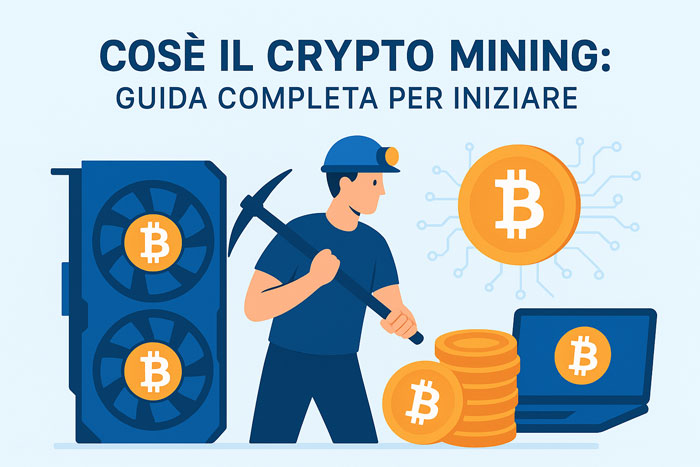
Crypto mining is the process through which transactions on Proof-of-Work (PoW)-based blockchains are validated and, at the same time, new tokens are created. It is the activity that keeps networks like Bitcoin alive, guaranteeing security, decentralization and data integrity.
In practice, miners use specialized hardware – such as ASICs or GPUs – to solve complex mathematical calculations. The first to find the valid result "wins" the right to add a new block to the blockchain, receiving a reward in cryptocurrency.
How Mining Works
Mining is based on three fundamental elements:
- Hashrate: the computing power available to solve algorithms.
- Difficulty: a dynamic parameter that regulates how difficult it is to mine blocks, keeping network times stable.
- Blocks: sets of transactions that are committed and added to the distributed ledger.
Each miner competes to find a valid hash, a value that meets certain requirements imposed by the protocol. Once found, the block is propagated to the network and inserted into the blockchain.
What You Need to Start Mining
To get started, you need some essential elements:
- Hardware: ASIC for Bitcoin or GPU for PoW altcoins.
- Energy: Mining requires significant electrical consumption.
- Software: programs such as HiveOS, NiceHash or dedicated miners.
- Pool: in most cases you mine cryptocurrencies by joining a mining pool.
- Wallet: to receive and store rewards.
The initial configuration varies greatly depending on whether you want to mine from home or set up an industrial setup.
Is Mining Still Convenient?
Convenience depends on various factors:
- cost of electricity
- hardware efficiency
- choice of cryptocurrency
- network difficulties
- crypto market trend
In 2025, mining is still profitable, but requires a technical approach and good planning.
Advantages and Risks of Mining
Advantages
- Direct entry into the crypto world
- Possibility to generate continuous earnings
- Contribution to blockchain security
Risks
- Increased operating costs
- Noise and heat generated by hardware
- High global competition
- Possible obsolescence of the machines
An accurate ROI analysis is always essential.
Conclusion
Crypto mining represents one of the pillars of blockchain technology. Starting today is possible, but it requires knowledge, planning and adequate tools. This guide offers the basis for understanding how mining really works and what steps to take to start correctly and consciously.