Technical analysis
Supports and Resistances: How to Identify and Use Them in Trading
Support and resistance are among the most powerful and used tools of technical analysis. They represent psychological and structural levels where the price of an asset, including cryptocurrencies, tends to stop, bounce…
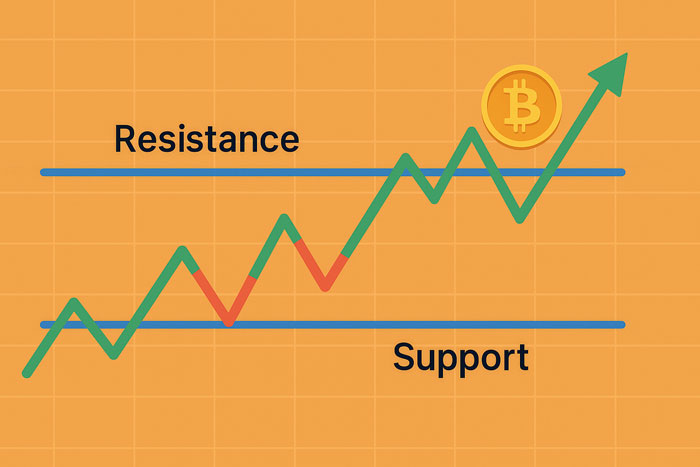
Support and resistance are among the most powerful and used tools of technical analysis. They represent psychological and structural levels where the price of an asset, including cryptocurrencies, tends to stop, bounce or reverse direction. Understanding how to identify them and how to use them correctly can significantly improve the accuracy of your trading entries and exits.
Support is a price level where demand tends to exceed supply. When the price drops towards support, many traders view that area as an opportunity to buy, increasing bullish pressure and encouraging a rebound. It is the “floor” of the market: the more times the price bounces from that level, the stronger the support becomes. However, if the support is broken with strength and high volume, it can turn into future resistance.
Resistance, on the other hand, is the level at which supply exceeds demand. When the price rises towards resistance, many traders begin to sell, believing that the market is overextended. It is the “ceiling” of the chart: if the price repeatedly fails to overcome a resistance, that area consolidates as a major barrier. Here too, if the level is forcefully broken, it can become a new support.
Identifying support and resistance isn't just about drawing horizontal lines. They can also be identified through trendlines, channels, moving averages and Fibonacci levels. Each tool offers different but complementary perspectives. For example, a long-term moving average can act as dynamic support, while a Fibonacci retracement can highlight price levels that statistically act as natural barriers.
Using these levels in trading allows you to build more precise strategies. Entering near support reduces risk and maximizes profit potential, while selling near resistance increases the likelihood of exiting at the best possible price. Support and resistance are also essential tools for positioning stop loss and take profit, helping to manage risk with more awareness.
In addition to their identification, it is essential to evaluate the strength of a level. A support tested only once is less reliable than one that has rejected the price multiple times. Volumes also play a key role: if a level is broken on low volumes, it could be a false breakout; on the contrary, an explosion of volumes confirms the validity of the breakup.
In a volatile market like that of cryptocurrencies, supports and resistances become essential reference points for reading the market structure, anticipating significant movements and building more solid strategies. Learning to identify and interpret them is one of the most important steps to becoming an aware and prepared trader.