Security
Hardware Wallet vs Software Wallet: Which is More Secure?
When you start investing in cryptocurrencies, the first big question is: where do I keep my funds safely? The most important choice is often between hardware wallet and software wallet, two tools that perform the same task…
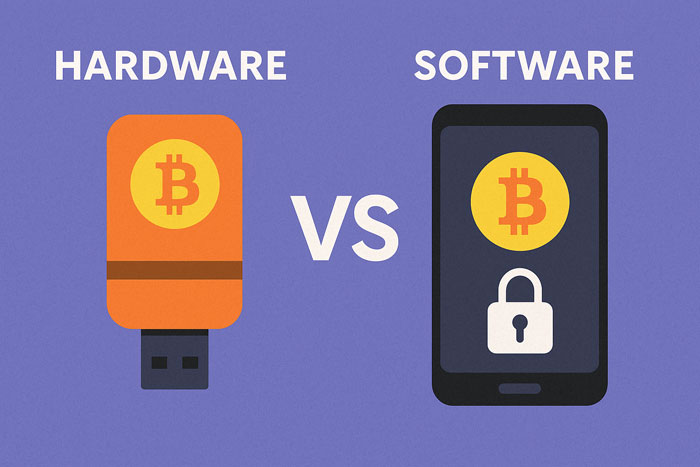
When you start investing in cryptocurrencies, the first big question is: where do I keep my funds safely?
The most important choice is often between hardware wallet and software wallet, two tools that perform the same function – storing your private keys – but with very different approaches to security, convenience and costs.
Understanding the differences, advantages and limitations of each is essential to truly protect your crypto capital.
1. What a crypto wallet really does
A wallet does not "contain" the coins, but holds the private keys, i.e. the codes that allow you to sign transactions and move the cryptocurrencies registered on the blockchain.
- If someone gets your private keys or your seed phrase, they can empty your wallet.
- If you lose this information without backup, you will no longer be able to access your funds.
For this reason, the choice of the type of wallet is a security decision, even before one of convenience.
2. What is a software wallet
A software wallet is a program or app:
- installed on the PC (desktop wallet),
- on the smartphone (mobile wallet),
- or as a browser extension (widely used in Web3 and DeFi).
The private keys are generated and stored on the device and the wallet is connected to the Internet, therefore it falls into the hot wallet category.
Advantages of wallet software
- Convenience: always at hand, ideal for payments, fast swaps, interaction with DApps and NFTs.
- Speed: you sign transactions in seconds.
- Cost: almost always free.
- User experience: often intuitive interfaces, perfect for beginners.
Disadvantages of wallet software
- The device (PC or smartphone) is exposed to viruses, malware and keyloggers.
- If someone takes control of your device, they can easily access the wallet.
- Security depends a lot on how you protect the device: password, PIN, updates, antivirus.
In summary: the software wallet is convenient but more vulnerable. Excellent for small sums and daily use, less suitable for long-term "treasure".
3. What is a hardware wallet
A hardware wallet is a physical device (similar to a USB stick) designed specifically to store private keys in an isolated way.
Main features:
- Private keys are generated within the device and never leave the hardware wallet.
- When you sign a transaction, the signing happens on the device, while the PC or smartphone only sees the signed transaction, not the keys.
- It is considered a cold storage method, because the keys are not normally exposed to the Internet.
Advantages of hardware wallet
- Very high level of security: even if the computer is infected, the attacker cannot read the private keys.
- Physical security: Often protected by PINs, additional passphrases, and reset functions in case of incorrect login attempts.
- Ideal for storing large capital for a long time.
Disadvantages of hardware wallet
- Initial cost: you must purchase the device.
- Less immediate for quick operations: you have to connect it, enter PIN, confirm on the display.
- Requires a little more attention in configuration (saving seed phrases, updating firmware, etc.).
In summary: the hardware wallet is the safest tool for those who want to protect large sums and do not need to move them constantly.
4. Direct comparison: which is safer?
From the point of view of pure security, the winner is clear:
Hardware wallet > Software wallet
Why?
- Private key isolation
- Software wallet: keys on the device connected to the Internet.
- Hardware wallet: keys inside a dedicated chip, never exposed directly to the PC or phone.
- Resistance to malware and keyloggers
- Software wallet: If your device is compromised, malware can intercept passwords, seeds, or change sending addresses.
- Hardware wallet: even with an infected PC, the transaction must be confirmed on the device, which shows the address and amount.
- Visual verification of transactions
- Hardware wallet with screen allows you to check real data before approving, reducing the risk of scams using fake software.
That said, "safer" doesn't mean that the software wallet is useless: it simply has a different role in the overall strategy.
5. How to use hardware and software wallets in a complementary way
The best solution for many users is to use them together:
- Hardware wallet
To store the bulk of your capital: BTC, ETH and other long-term assets.
You only use it when you need to make important trips. - Software wallet
For small sums to use every day: payments, tests on DApps, NFTs, small quick trades.
This way you get:
- the maximum security for the main funds
- operational convenience for daily activities.
6. Regardless of the wallet: basic good practices
Whether you choose hardware, software or both, some rules still apply:
- Always protect the seed phrase on secure physical media (not photos, not screenshots, not cloud).
- Use long and unique passwords for each service.
- Enable 2FA wherever possible.
- Keep your wallet software, operating system and firmware updated.
- Buy hardware wallets only from reliable manufacturers and from official channels (avoid used or broken seals).
7. Conclusion: which one to choose?
- If you are starting with small amounts and want to test the crypto world, a good wallet software may be enough, as long as the device is protected.
- If the value of your assets grows or you already have a certain sum to protect, purchasing a hardware wallet becomes almost mandatory.
The smartest strategy is to consider the wallet as a digital safe: a normal wallet is enough for a few pennies, but when the money increases, you need a real safe.