NFT & metaverse
How NFTs Work: Blockchain, Smart Contracts and Digital Property
NFTs are not simply digital files, but unique tokens that live on the blockchain and represent a new form of digital ownership. To really understand how it works it is essential to know three elements that…
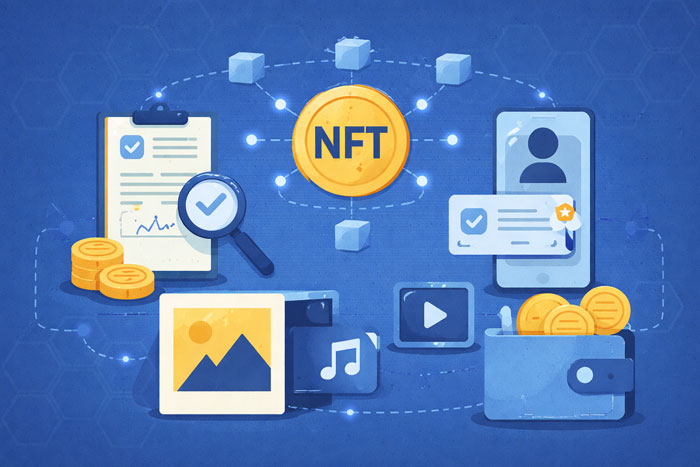
NFTs are not simply digital files, but unique tokens that live on the blockchain and represent a new form of digital ownership. To truly understand how it works, it is essential to know three key elements: blockchain, smart contracts and property rights.
The role of blockchain in NFTs
The blockchain is a public, decentralized and immutable ledger. Each NFT is created (mined) and recorded on a blockchain, usually Ethereum, but also Solana, Polygon or other compatible networks.
This technology guarantees:
- Total transparency
- Traceability of transactions
- Impossibility to modify data
- Absence of intermediaries
Every change of ownership of an NFT is recorded and verified by the network, making the asset safe and verifiable by anyone.
What are smart contracts
Smart contracts are automatic programs that live on the blockchain and regulate the functioning of NFTs. They precisely define:
- Who is the creator
- Who is the owner
- Sales rules
- Royalties for the author
- The transfer conditions
Thanks to smart contracts, for example, an artist can automatically receive a percentage of each future resale of their NFT, without having to depend on centralized platforms.
How an NFT is born: the minting process
Minting is the process by which digital content becomes an NFT. During this phase:
- The file is connected to a smart contract
- Metadata (name, description, rarity) is created
- The NFT is registered on the blockchain
- The token becomes unique and transferable
Since that time, the NFT has existed as an autonomous digital asset.
Digital ownership: what you really own
Owning an NFT means holding a verifiable certificate of digital ownership. It is not always equivalent to owning the copyright, but it guarantees:
- Token properties
- Proof of authenticity
- Right of sale or transfer
- Access to any utilities
In Web3, ownership is no longer entrusted to platforms, but directly to the user via wallet.
NFT, decentralization and Web3
NFTs are one of the pillars of Web3, an internet based on decentralization and direct control of assets. They eliminate intermediaries, reduce censorship and enable new forms of digital economy, from gaming to the metaverse.
Why how NFTs work is revolutionary
The combination of blockchain and smart contracts creates a reliable, automatic and global system. This makes NFTs powerful tools not only for collectors, but also for creators, brands and companies.