Binance
Binance Earn: How It Works and How to Use It to Make Your Crypto Profit
Binance Earn is the section of Binance designed for those who want to "produce" their cryptocurrencies, without having to actively trade every day. In practice, instead of leaving the tokens still in the exchange wallet...
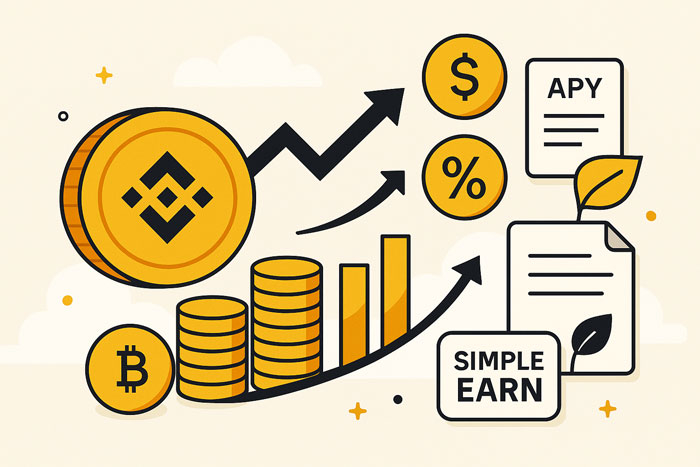
Binance Earn is the section of Binance designed for those who want to "produce" their cryptocurrencies, without having to actively trade every day. In practice, instead of leaving the tokens still in the exchange wallet, you can choose savings and investment products that aim to generate earnings over time. It is an area widely used by both beginners (who are looking for simple solutions) and more experienced users (who want to optimize liquidity, diversify and manage risk).
Why Binance Earn exists (and why it interests so many)
In the crypto world, the basic idea is the same as with any investment: if an asset remains inactive, you are giving up possible opportunities. Binance Earn was created to offer a "container" where you can find different strategies, with different levels of risk and flexibility:
- More conservative solutions: generally lower returns, but often with more linear mechanisms.
- More dynamic solutions: potentially higher returns, but with more complex conditions and risks.
- Tools for managing liquidity: useful if you want to maintain the ability to move funds or take advantage of market opportunities.
The key point is that there is no "absolute best" product: it depends on objectives, time horizon and risk tolerance.
Visit the official Binance website now and register for free

The main types of products inside Binance Earn
1) Simple Earn
It is often the gateway for beginners. The idea is simple: you deposit a crypto and aim to receive a periodic return. Generally you will find two approaches:
- Flexible: you can regain possession of the funds more easily, but the return may be more variable.
- Locked/Term: funds restricted for a certain period; usually the return is higher because you give up immediate liquidity.
It's a similar logic to "parking" capital, with the difference that in crypto the rates can change quickly depending on demand, liquidity and market conditions.
2) Staking (also via Earn)
Staking, in general, concerns supporting blockchain networks based on Proof of Stake. You stake a token and, in exchange, get rewards. On Binance this experience is simplified: you don't have to configure particular nodes or wallets, but some aspects remain important:
- Price risk: if the token falls, the return may not compensate for the loss in value.
- Constraints/unlocking times: some networks have unbonding periods (not immediate).
- Operational risk: using an intermediary reduces complexity, but introduces platform dependency.
3) Launchpool and promotional activities
Sometimes Binance offers campaigns where, by blocking certain assets (often BNB or stablecoins), you can get rewards in new tokens. These ventures are attractive because they can offer high returns, but they are generally:
- Limited in time
- Subject to strong volatility of the reward token
- To be carefully evaluated (do not confuse the "reward" with a certain profit)
4) “Structured” products (more advanced)
This includes instruments that promise potentially higher returns, but with more complex rules. The return often depends on price scenarios, maturities and pre-established conditions. They are products that require you to understand well:
- what happens if the market goes against your hypothesis
- if you may end up with a different asset than the initial one,
- and how exposed you are to volatility.
If you are a beginner, it is best to consider them only after having fully understood the mechanisms and risks.
Real Benefits of Binance Earn
- Simplicity: many solutions are accessible with just a few clicks, without having to use DeFi, bridges or technical procedures.
- Diversification: you can distribute capital across different products, reducing dependence on a single strategy.
- Liquidity management: by choosing well between flexible and blocked, you can balance performance and availability of funds.
- Possible income in lateral periods: when the market is not very directional, Earn can make sense of "fixed capital".
Risks and things to understand before starting
Binance Earn is not “secured bank interest”. Even when everything seems simple, there are real risks:
- Market risk (price)
The return is often paid in crypto: if the asset goes down, you can be at a loss even with a positive APY. - Liquidity risk and constraint
If you block funds and need to exit, you may not be able to do so immediately (or you may do so with penalties/conditions). - Platform risk (custodial)
Leaving funds on an exchange means relying on an intermediary. It's convenient, but it's not the same as keeping your keys privately. - Variable Yields
APYs and terms change: do not consider a rate “permanent”. - Complexity of advanced products
In structured products, the word “high yield” often means “high risk scenario”. Always read the rules to the end.
Practical strategy for using Earn sensibly (especially if you are a beginner)
A balanced approach can be:
- Start with small amounts to understand how credits, timing and redemptions work.
- Prefer flexible products if you don't yet have a precise plan and want to maintain liquidity.
- Use stablecoins with caution: they are less volatile than BTC/ALT, but are not without risks (issuer, depeg, market conditions).
- Avoid more complex products until you can explain to yourself what happens in the worst case.
- Don't focus everything on Earn: also diversify between instruments and, if possible, between cases (exchange vs personal wallet).
Conclusion
Binance Earn can be an excellent tool for "putting crypto to work", especially for those who want a simple and integrated experience in the exchange. The key is to choose products consistent with your goals: if you need flexibility, avoid long constraints; if you're looking for more return, accept that you're also taking on more risk. And, as always in the crypto world, risk management matters more than the promised return.